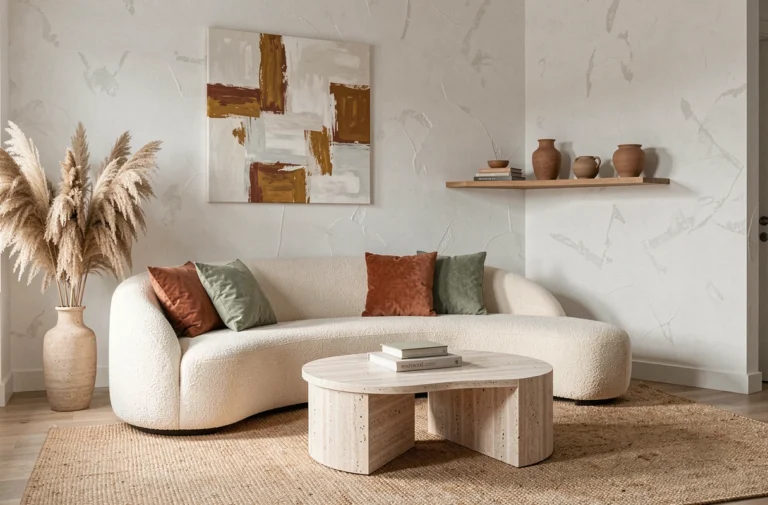
Moving into a new home often means facing empty rooms and a shopping list that seems endless. The classic reflex is to buy quickly, sometimes too much, without prioritizing. The result: a budget eaten away by impulsive purchases and an interior that lacks coherence. Equipping your home methodically requires distinguishing what is essential for daily comfort from what can wait.
Home office and air quality: two often overlooked aspects in the list of essentials
Have you ever spent an entire day working at a corner of the kitchen table, hunched over, with the screen too low? Since the rise of hybrid work, having a proper workspace at home is no longer a luxury. A desk at least 100 cm wide, an adjustable chair, and directed lighting are enough to transform a nook into a productive space.
The other neglected aspect is indoor air quality. A well-maintained ventilation system, a kitchen hood that effectively filters cooking vapors, and daily ventilation are fundamental to sanitary comfort. Recent recommendations from French health authorities place these amenities on the same level as furniture in defining a comfortable home.
A portable CO₂ sensor is inexpensive and makes an otherwise imperceptible problem visible. When the concentration rises, you know right away: just open the window. This type of small device concretely changes habits effortlessly.
Furniture and storage: choose less but choose well
Before filling every square meter, a simple framework helps sort: for each room, identify the key piece of furniture (the one that structures the space) and the associated storage. The rest can come later, as real needs arise.
To find the essential equipment according to Capitaine Immo, this room-by-room logic ensures nothing is forgotten while maintaining a clear overall vision.
Living room and bedroom: the key pieces of furniture
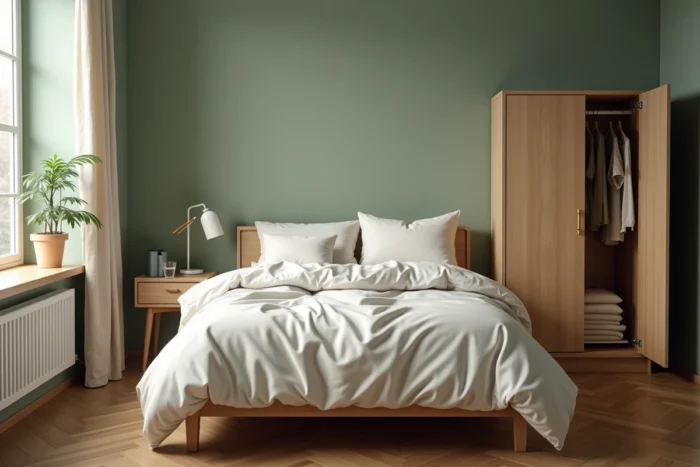
The sofa and bed are the two primary investments. These are the pieces of furniture you will use the most, every day, for years. Saving on a mattress to buy a larger TV stand is a common mistake that pays off in fatigue and back pain.
For the living room, a sofa suited to the dimensions of the room takes precedence over the trendy model seen online. Measure the available space before choosing. An oversized sofa overwhelms a small room and makes movement uncomfortable.
- A bed with a quality base, suited to your body type, guarantees real rest. The mattress should be chosen in-store, not just based on specifications.
- A coffee table or side table often replaces an unnecessary accent piece while freeing up floor space.
- A closed storage unit (buffet, dresser) prevents visual clutter and keeps the space tidy effortlessly.
Kitchen: essential appliances and basic dishware
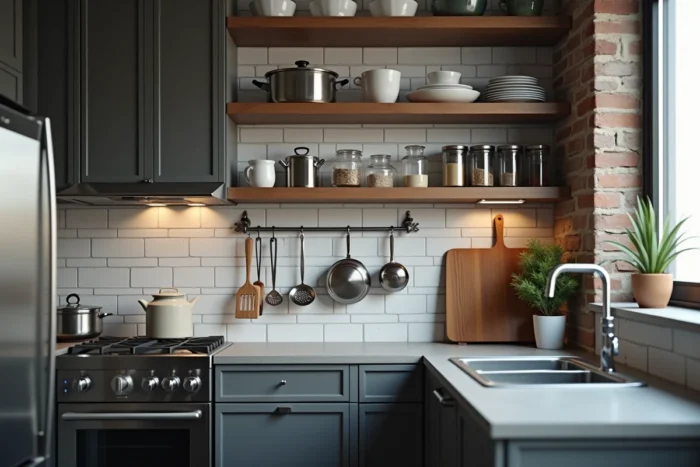
The kitchen accounts for the most purchases when moving in. Again, hierarchy helps. A refrigerator, cooktop, and oven cover almost all needs. The rest (food processor, bread machine, fryer) is personal use and can come later.
For dishware and utensils, a set for four people, two pots of different sizes, a frying pan, and a baking dish form a sufficient starter kit. Accumulating gadgets clutters cabinets and complicates organization from the first weeks.
Household linen and textiles: the comfort you can feel
Household linen is often relegated to the bottom of the list, yet it determines the comfort felt daily. Two sets of sheets, two sets of bath towels, and a shower curtain constitute the bare minimum to ensure a rotation during laundry days.
Upholstery textiles (curtains, cushions, throws) play an often underestimated role in the acoustic and thermal insulation of a home. A thick curtain in front of a poorly insulated window significantly reduces the feeling of cold in winter. A rug in a tiled room absorbs footstep noise and visually warms the space.
Have you noticed how a room without textiles feels cold, even when heated? It’s the absence of soft materials that creates this impression. A few well-chosen elements can change the perception of an entire room without renovation.
Simple home automation and energy management: the new essentials of housing
Smart bulbs and programmable thermostats are no longer just gadgets. In a context of rising energy prices, controlling your heating and lighting remotely reduces consumption without sacrificing comfort. A programmable socket that cuts off devices’ standby mode at night is a minimal investment for a concrete result on the bill.
ADEME and ANAH recommend these devices in their advice for energy-efficient housing. No need for a sophisticated system: a connected thermostat, two or three controllable bulbs, and a power strip with a switch are enough for a first level of smart management.
Prioritizing purchases: a three-phase framework
Instead of an endless list, breaking it down into three phases prevents buying everything in the first month:
- First week: bed, bedding, refrigerator, main light fixture per room, basic cleaning products.
- First month: sofa, table, closed storage, dishware and kitchen utensils, curtains.
- First three months: additional comfort items (rugs, cushions, simple home automation, office furniture if working from home).
Buying in three phases allows you to test your real needs before spending. What seemed essential in the store may prove unnecessary after a few weeks in the home. Waiting also gives you the opportunity to find the right piece of furniture at the right price, without rushing. The comfort of a home is built over time, not in a single shopping cart.