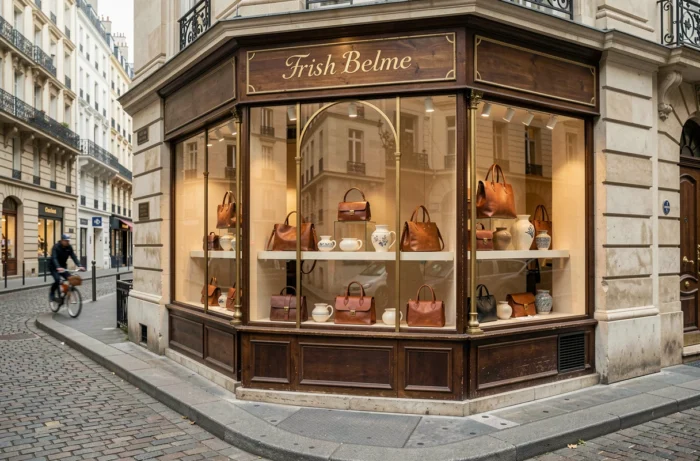
In 2026, the concept of “French brand” encompasses very different realities depending on whether we are talking about design, manufacturing, or headquarters. Rankings are multiplying, trust labels are increasing, and regulatory obligations have changed the game for online product sheets. Therefore, creating a directory of French brands to discover online requires clarifying what is being compared and on what criteria.
Environmental sheets and traceability: what has changed for online brands
Since January 1, 2025, brands exceeding certain regulatory thresholds for revenue and volumes must publish online, for each model, information on traceability, recycled materials, and several environmental characteristics. This obligation directly modifies what a consumer can read on a product sheet.
A directory of French brands benefits from integrating this filter. Brands that document their products model by model stand out from those that only provide general claims on their “commitments” page. For anyone browsing an online catalog, the presence or absence of these sheets constitutes an initial objective sorting.
Environmental display (textile eco-score) can now be calculated by third parties, even if the brand does not publish it itself. Brands that already communicate an alternative environmental score must also present the official score. This point is still poorly known, but it allows you to learn more on Blogueuse Entrepreneuse and about how some directories rank brands based on their level of actual transparency.

French brand and manufacturing in France: a distinction to make before any selection
Stating that a brand is French does not indicate anything about the location of its product manufacturing. A headquarters in Paris, a design office in Lyon, and production in Portugal or Southeast Asia is a common pattern in ready-to-wear, cosmetics, or entry-level leather goods.
Checking the country of production remains the only reliable method. The mention “Designed in France” or “Designed in Marseille” has no regulatory value regarding the origin of manufacturing. Only the Origine France Garantie certification involves independent control over where the product takes its final form.
Some concrete guidelines for filtering an online directory:
- Look for the mention of the country of manufacture directly on the product sheet, not only in the general conditions or the “our story” page.
- Identify if the brand publishes a list of its workshops or suppliers, even if partial. Some textile brands like 1083 or Maison Lemahieu document their production chain in detail.
- Check for the existence of a third-party label (Origine France Garantie, Entreprise du Patrimoine Vivant) rather than relying on a self-proclaimed in-house logo.
2026 ranking of the favorite brands of the French: what surveys really measure
The 2026 Observatory conducted by OpinionWay for “Favorite Brand of the French” surveyed consumers on 1300 brands. The main result: 81% of the French declare they trust brands, and the average love rating has reached its highest level since the post-COVID period.
La Laitière comes out on top of the rankings. This return of so-called “comfort” food brands to the top 30 illustrates a methodological bias to keep in mind: these rankings measure familiarity and emotional attachment, not the intrinsic quality of the products or environmental commitment.
What these rankings do not capture
A declarative survey on 1300 brands mechanically favors brands with high advertising notoriety. Artisan brands, young creators, or niche labels do not appear there due to a lack of spontaneous recognition by a representative panel.
For an online directory, relying solely on these rankings would mean reproducing the list of the most visible brands in mass distribution. The brands to discover online are often those that do not appear in any mainstream rankings.

Repair and durability: a selection criterion more useful than storytelling
Among the underutilized angles in existing directories, repair offers a concrete discovery filter. Some French brands offer an alteration or repair service integrated into their online store.
This criterion has a practical advantage: it distinguishes brands that invest in the longevity of their products from those that limit themselves to a discourse on sustainability without verifiable mechanisms.
- Some brands display a repair request form directly on their site or a partnership with a network of referenced tailors.
- Others publish detailed care guides by material, which prolongs the lifespan of items without external intervention.
A useful directory ranks brands based on verifiable criteria, not on narrative promises. The presence of an environmental sheet per model, transparency about the place of manufacture, access to a repair service: these three filters are sufficient to sort the majority of French brands present online. Notoriety rankings complement the picture, provided they are read for what they measure, namely familiarity, not quality.