In France, more than 281 crafts are officially listed by the Ministry of Culture, but some artisans create specialties each year that do not appear in any classification. Despite the rise of industrial technologies, the sector shows steady growth and attracts many young people looking for a career change. The criteria for excellence, often passed down outside traditional circuits, sometimes escape the usual standards of production.
Some creations require skills that are transmitted only orally or through gestures that have never been documented. Labels and institutional recognitions struggle to keep up with the real diversity on the ground.
French craftsmanship, a living and inspiring heritage
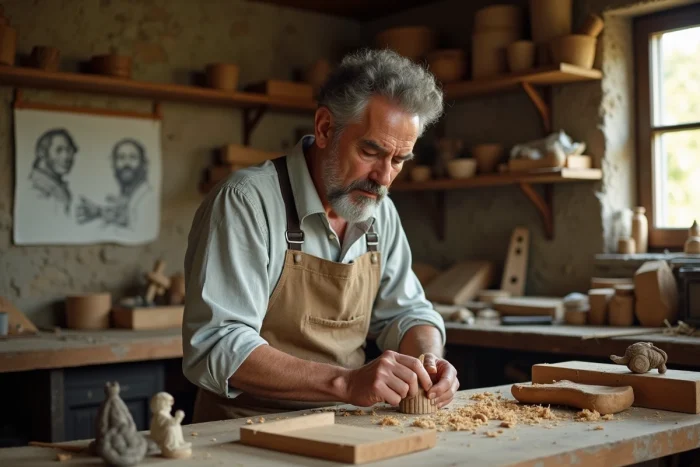
It is impossible to mention French craftsmanship without highlighting the strength of the social and cultural fabric that its crafts represent. From generation to generation, precise gestures are passed down and reinvented, a living legacy of ever-renewed creativity. Behind each piece, there is patience, rigor, and that little extra soul that makes the difference. From one end of the territory to the other, France vibrates to the rhythm of its workshops: the crystal factory in Baccarat, the metalwork of Villedieu, the pottery of Puisaye, the lace of Puy… Each region proudly carries its traditions and artisans. The MIF Expo brings together each year, at Paris Expo Porte de Versailles, the energy of the Chambers of Trades and Crafts. The Village of Crafts showcases the richness and diversity of Made in France, exhibiting works and paths that never resemble each other. In Paris, the Label Made in Paris highlights those who reinvent local craftsmanship without betraying tradition. These initiatives are exported well beyond borders, spreading French know-how internationally. Between unique pieces, utilitarian objects, and decorative works, each creation tells the story of the encounter between inventiveness and discipline. For those wishing to explore this diversity, visiting the cœur artisan website allows you to discover a selection true to the spirit of crafts and individual stories. French craftsmanship remains a living heritage, driven by the passion and tenacity of those who choose, every day, to work differently.
What skills and crafts shape the wealth of our regions?
It is impossible to provide a complete list of French crafts as the palette is so rich, but some names stand out immediately: Baccarat, Daum, Lalique, Saint-Louis. The tradition of crystal making in the East is the alliance of light and matter, of a sure gesture and precision passed down for several centuries. Nancy, Wingen-sur-Moder, Saint-Louis-lès-Bitche: these are places where each work is the result of a long chain of transmission. Heading south, with the pottery of Puisaye, where stoneware is still shaped today at the Château de Ratilly, in a vibrant and open workshop. In Limoges, porcelain continues to shine thanks to houses like Bernardaud or the Adrien Dubouché Museum, recognized worldwide. Other names dot the map: faience from Quimper, ceramics from Moustiers-Sainte-Marie, lace from Puy… Here, fire and thread come together to give birth to unique works. The cutlery in Thiers shapes steel uncompromisingly, while Millau perpetuates the tradition of glove-making, a discreet elegance inherited from local know-how. The workshops of Villedieu, metalwork, ivory work from Dieppe, perfumery from Grasse… These crafts together form a true mosaic, where each workshop cultivates its difference.
Some markers help to identify what makes the strength of these creations:
- Unique pieces and exceptional creations come to life thanks to extreme attention paid to each step, in respect of a responsible approach.
- Behind each shop or workshop, there is a story to discover: that of a territory, a material, an authentic passion.
The European Days of Crafts open the doors of workshops and place the public at the heart of the artisanal reality. These moments of encounter reveal the vibrancy of the sectors, the strength of transmission, the dynamism of training, and remind us how French craftsmanship knows how to reinvent itself, year after year.
Meetings with committed creators: talents to discover and support
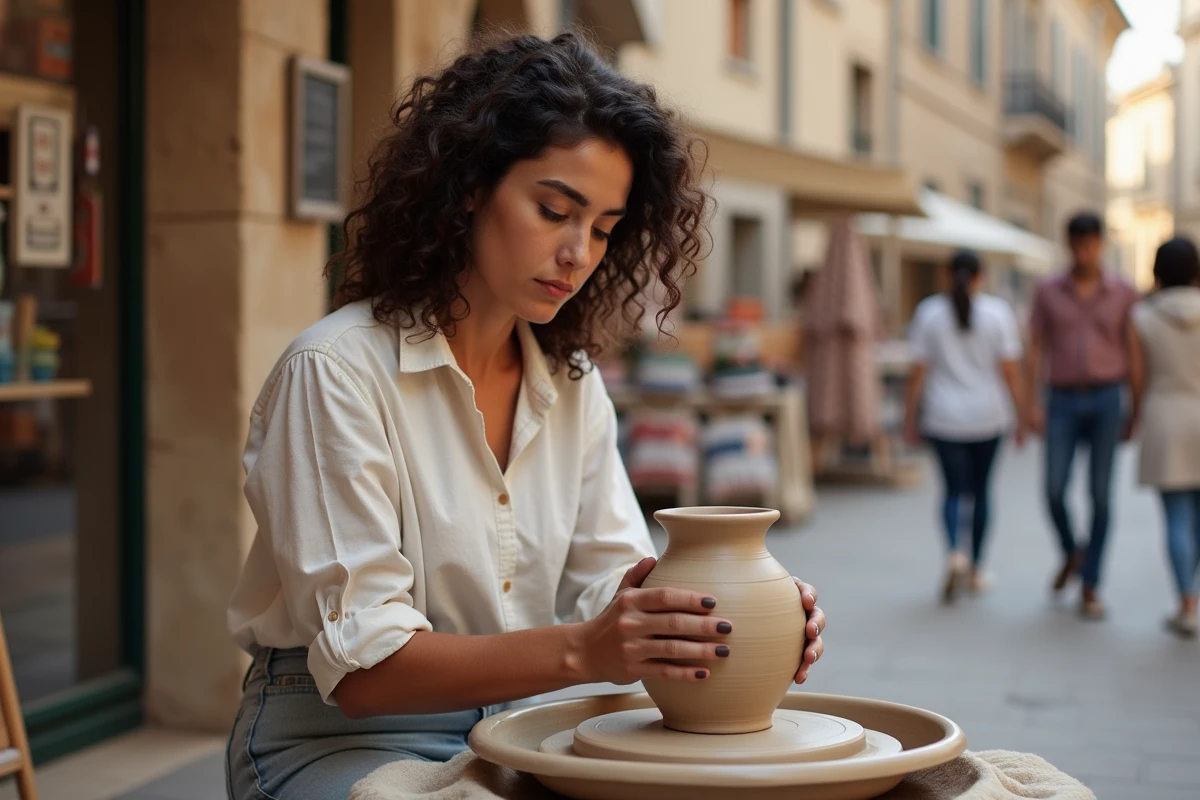
In Sausset-les-Pins, Laurent Boyer is dedicated to reinventing vinegar while respecting traditional gestures. In his artisanal vinegar factory Côte Bleue, each bottle bears the mark of a terroir and a commitment to tradition. Further south, Stefanina Defendini is involved with U Deliziu Corsu to promote Corsica in Talasani: here, the priority is on short circuits and the valorization of local resources. The workshop evolves, becoming a space for sharing. In Bonifacio, Valérie Soulage shapes jewelry inspired by the seabed under the brand Deep Coral. In Bordeaux, Mavrick Potez founded MONA Watches to defend French watchmaking and highlight the quality of manual work. Uniqueness, demand, love of the material: these creators each tell a story, a vision, a fierce will.
Some examples illustrate this movement in the territories:
- In Plourivo, L’atelier de Barthélémy cultivates the taste for precise gestures.
- In Marles-sur-Canche, Ombeline Cardin, founder of Helix Atelier, reinvents marquetry with a contemporary vision.
- Victor Guérif, a luthier based in Besançon, explores the balance between tradition and innovation in the making of his instruments.
These artisans draw on digital resources and workshop-shops to open a dialogue with the public and defend French creation. Their approach goes far beyond the simple object: it affirms the place of the hand, the gesture, and passion in a society that more than ever needs meaning and roots. Craftsmanship is that discreet hand that shapes, transforms, transmits, a breath of freedom that has lost none of its strength.