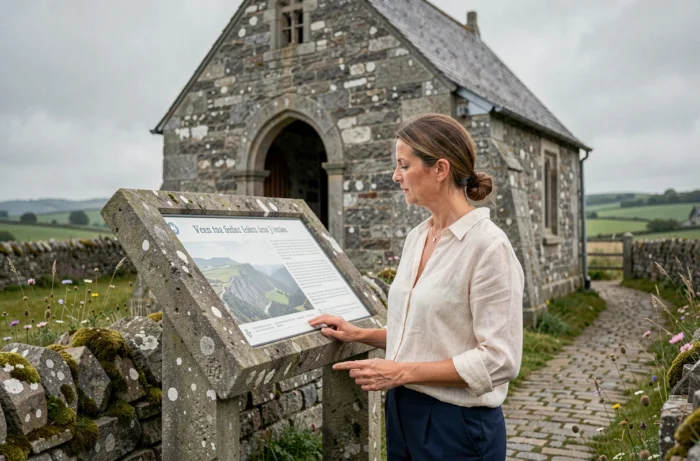
Cultural leisure activities in Brittany are not limited to the marked circuits between parish enclosures and megalithic alignments. The region is renewing its mediation formats, expanding the notion of heritage to include matrimony, and gradually requiring reservations for its most popular events. Here, we decode the lesser-documented aspects of this offering.
Brittany’s Matrimony: A Cultural Aspect Still Underutilized
The Brittany Region has been promoting the concept of matrimony alongside monumental heritage for several editions. The principle: to make visible the contributions of women to local history, whether in architecture, textile crafts, or oral transmission.
This aspect remains marginal in most tourist guides. The routes dedicated to matrimony focus on figures and places that traditional circuits ignore. For visitors wishing to access culture-bretagne.org, it is a search filter to prioritize before planning a cultural stay.
We recommend cross-referencing these proposals with the programming of the European Heritage Days, which now includes an identified matrimony component. The Region publishes an annual selection of favorites: about fifty sites and events highlighted across the four Breton departments.
Heritage Days in Brittany: Density and Reservation Constraints
The edition on September 19 and 20, 2026, offers nearly 1,300 events spread across the four departments. This density is an asset, but it generates a logistical problem that general articles overlook: rapid saturation of capacities.
In Brest, several visits during the 2026 European Heritage Days require prior registration. Other activities remain free and accessible without reservation, within the limits of capacity. The trend towards mandatory reservations is expanding each year to more sites.
Preparing Cultural Visits in Advance
The school component, titled “Look Up!”, starts on September 18. It opens certain locations in preview to groups, which reduces availability on the day itself for individual visitors. We observe that Saturday morning slots often fill up before those on Sunday.
- Always check if the site requires online registration, especially for indoor visits (museums, archives, civil buildings).
- Favor outdoor activities and free urban routes, which remain accessible without capacity limits in most municipalities.
- Consult the departmental programming rather than just national sites, as events outside tourist hubs rarely show as fully booked.
Off-Season Cultural Leisure: Emerging Formats in Brittany
Seasonality remains a barrier for visitors who associate Brittany with summer vacations. However, local authorities and cultural organizations are developing formats designed for autumn and winter.
Artist residencies open to the public are gaining ground in Côtes-d’Armor and Finistère. These formats allow visitors to witness a creative process, not just a finished result. The visitor enters an active workshop, exchanges with the artist, and leaves with an understanding of the technical gesture.
Themed Visits and Night Tours
Heritage night tours are multiplying in medium-sized towns like Dinan or Saint-Brieuc. This format, long reserved for metropolises, adapts well to Breton historic centers where architectural lighting highlights granite and schist.
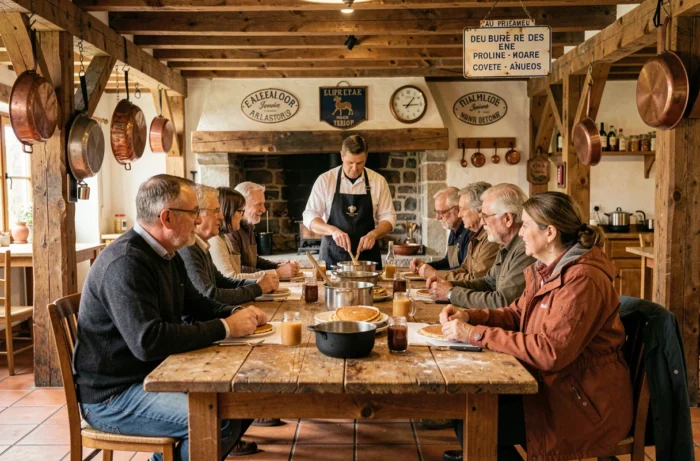
Workshops introducing local crafts (earthenware, embroidery, local cuisine) represent another lever. They target a short-stay audience, whether couples or families, looking for an activity lasting two to three hours rather than a full day of visiting.
Maritime Heritage and Coastal Culture: An Under-Documented Angle
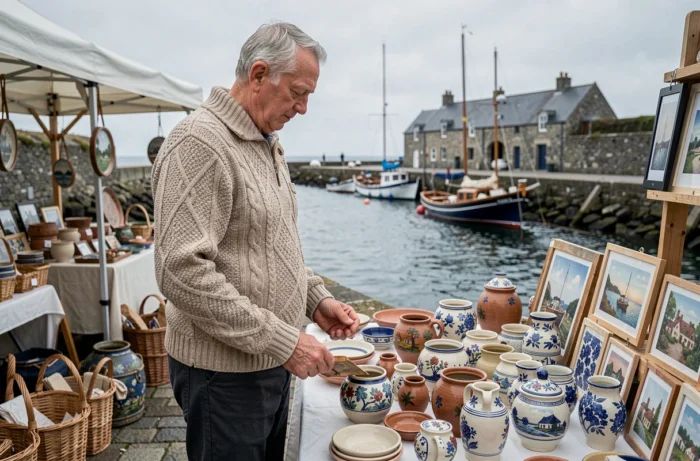
Brittany’s maritime museums are plentiful, but living coastal culture remains the poor relative of leisure guides. By coastal culture, we refer to traditional shipyards, sea festivals, heritage canneries, and public fish markets.
These places operate according to schedules linked to tides, fishing seasons, or boat restoration cycles. A shipyard restoring a dundee or a langoustier does not welcome visitors during the caulking phases in dry dock. This constraint requires checking the actual opening periods, which do not always match the hours displayed online.
Brittany’s Islands and Insular Cultural Offer
Belle-Île, Ouessant, or the island of Bréhat offer museums and interpretation routes that the boat crossing makes less accessible. This natural filter limits attendance and provides visiting conditions that the mainland can no longer guarantee at the most famous sites.
Temporary exhibitions on the islands follow their own rhythm, often aligned with the sailing season. Planning a cultural visit to an island requires checking both the museum hours and those of the ferry company.
- Ouessant: eco-museum and lighthouses open in season, with occasional conferences outside summer.
- Belle-Île: Vauban citadel and contemporary art galleries, accessible year-round but with reduced hours from October to March.
- Île de Bréhat: botanical trails and chapels, free and open access.
Cultural Brittany cannot be consumed like a checklist of activities. Formats are evolving, reservation constraints are tightening, and the richest angles (matrimony, coastal culture, insular programming) remain the least covered by mainstream guides. Cross-referencing local calendars with your own stay dates remains the most reliable method to access the most interesting visits.